
Which solution offers more functionality
In packaging, functionality is where true value lies. It’s not just about how a solution makes your product look; it’s about what it can do for your business. When one solution offers greater functional benefits than another, it doesn’t just perform better; it gives you a competitive advantage.
We’ve already examined how adhesive labels and banding compare in terms of sustainability and PPWR readiness. In this blog, we shift the focus to practical functionality. Which solution adds more value in a real-world application? From differences in branding potential and creative flexibility, to the ease of switching materials and applying the solution across multiple product types, we explore which option truly delivers more.
Key takeaways
-
Adhesive labels serve a single, straightforward purpose: basic branding and labeling, often on plastic packaging.
-
Banding goes further, offering enhanced branding potential, bundling capabilities, and wider application across packaging types.
Labeling & branding: More space, more creativity
Adhesive labels have long been the standard choice for labeling packaging like clamshells, trays, and other plastic packaging. Available in various formats, they’re typically designed to cover only a specific section of the packaging. This compact format helps maintain product visibility, but it also limits a brand’s ability to make an eye-catching impact.
Smaller labels often mean smaller opportunities. With restricted space, there’s little room for bold design, messaging, or promotional content. In practical terms, this creates a few key limitations:
- Minimal surface area for branding or storytelling
- Limited space for variable data like pricing or expiration dates
- No real space for extra promotional elements, such as QR codes, sales messaging, etc
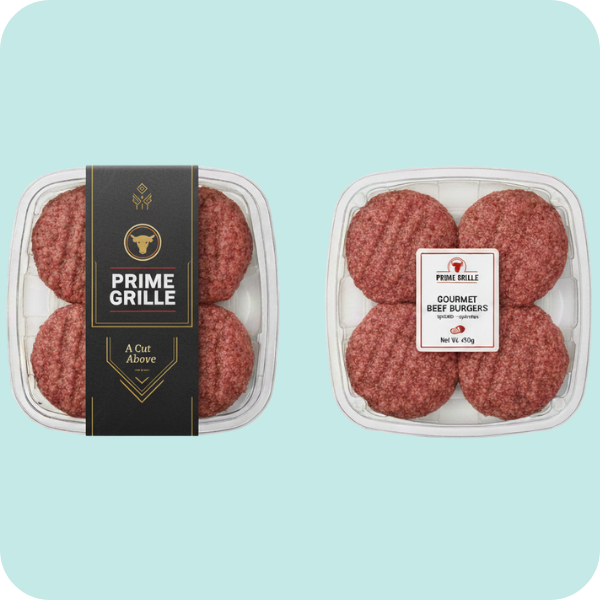
Banding takes a similar role to adhesive labels but adds built-in flexibility and creative freedom. Instead of covering just one part of the product, the material is wrapped around the center, offering a 360-degree canvas for branding and messaging. And even with this added coverage, bands can be just as slim and unobtrusive, keeping the product clearly visible.
What truly sets banding apart is its non-adhesive format. Without a sticky backing, both the outside and inside surfaces of the banding material can be branded, effectively doubling the available space for unique messaging and creative engagement.
This added freedom opens up a wide range of possibilities:
- Showcase brand identity, product info, or regulatory data on the outside
- Use the inside for whatever you want, like recipes, QR codes, competitions, or even conversation starters
Banding turns packaging into a versatile brand experience, not just a simple label.
Bundling: When packaging becomes logistical
Adhesive labels are designed to carry product information, not to bundle multiple items. If you need to group ready-made meals for transport or create promotional multi-packs, labels fall short. You’ll need a separate solution, meaning more materials, more machinery, and more cost.
Banding, on the other hand, enables both branding and bundling within the same process and equipment setup. The application remains the same for the material, but now you have multiple products being banded.
This means with a single banding machine, you can:
- Brand individual products with printed bands
- Bundle multiple units using unprinted or branded bands (ideal for combo packs, promos, or logistical purposes)
In this way, banding becomes more than just a branding tool; it’s a logistical solution, combining operational efficiency with marketing versatility.
Flexibility: One solution for all?
Packaging needs are rarely static. As product lines evolve and formats diversify, so too must the packaging solution. This is where adhesive labels start to show their limitations.
Adhesive labels are often product-specific. A label designed for one product cannot easily be used on another. In many cases, labels aren’t even a suitable solution, especially when it comes to paper or cardboard packaging. On plastic, adhesive removal is less noticeable, but on paper-based materials, it can leave behind visible damage and a poor unboxing experience.
Banding offers far greater flexibility. Since no adhesives are used, bands can be applied to any primary packaging material, plastic, paper, cardboard, and more, without leaving marks or residue. And because bands are not limited by surface type, you can freely mix and match materials.
This flexibility means banding is suitable for a wide range of industries, whether you're branding high-value pharmaceuticals, bundling books or boxed items, or securely packaging fruits and vegetables. It’s one solution that works across categories, formats, and materials.
Final thoughts: Is your packaging working hard enough?
Choosing between adhesive labels and banding depends on what you expect from your packaging.
If your priority is speed, simplicity, and cost-efficiency, adhesive labels remain a practical and familiar option.
But if you need a solution that offers more, creative branding, bundling capabilities, material flexibility, and the ability to work across a variety of packaging types, then banding presents a clear advantage.
It’s not about one being right and the other wrong. It’s about choosing the solution that aligns with your product goals and operational needs. For some, that’s a simple label. For others, it’s a smarter, harder-working solution, like banding.
Questions about our banding solutions?
Together we can find opportunities to optimize your packaging.

Applications of banding

Bands vs sleeves: Impact of weight
Band vs sleeves: Which is more efficient?

Banding vs. other solutions

Benefits of banding

Zwartz - From shrink wrap to paper bands

Novatrade - Improved quality and efficiency

Packaging food products
