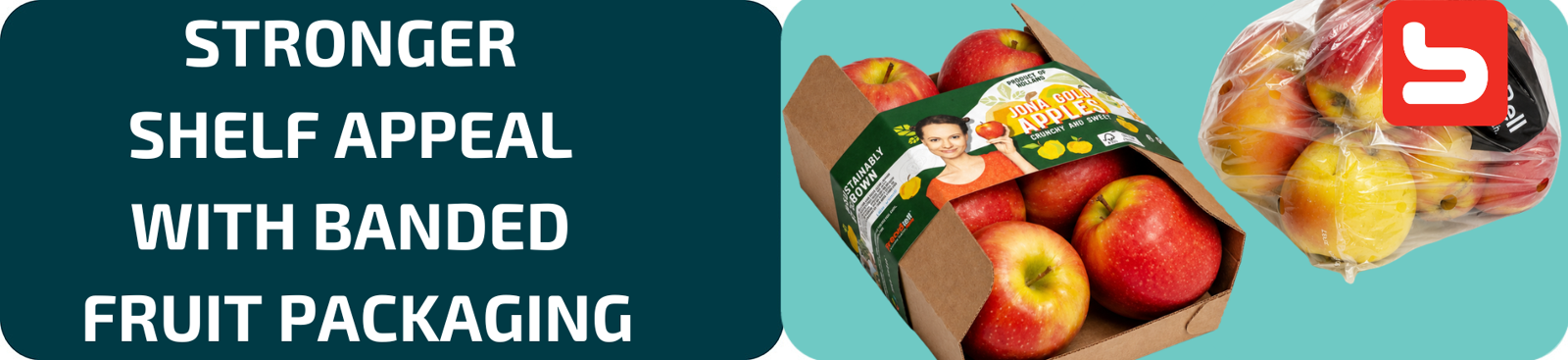
How banding improves branding and functionality in fruit packaging
Fruit packaging has to do more than protect the product. It also needs to communicate brand identity, product information, certifications, and retailer requirements while keeping the fruit clearly visible to consumers.
This creates a challenge for producers and retailers. Too much labelling can cover the product, while too little communication can weaken shelf impact and brand recognition.
Banding offers a practical solution. By wrapping printed banding material around the primary packaging, fruit brands can add a clear communication surface without hiding the product inside. Depending on the packaging format, banding can also support closure, tamper evidence, recyclability, and a more premium presentation.
In this article, we look at how banding can be used across different fruit packaging formats and what each application can offer.
Why more fruit brands are using banding
Fresh fruit is often chosen visually. Consumers want to see colour, ripeness, quality, and portion size before they buy. For this reason, fruit packaging needs to provide information without blocking the product from view.
Printed banding material makes this possible by creating a visible communication surface around the pack. Unlike a small label, a band can carry branding, product details, barcodes, certifications, origin information, or promotional messages across a larger area of the packaging.
At the same time, the fruit remains clearly visible. This balance between visibility and communication makes banding especially useful for fresh produce packaging.
Banding can also add practical value. Depending on the packaging format, it can help keep packs closed, provide tamper evidence, reduce the need for additional labels, and make packaging components easier to separate after use.
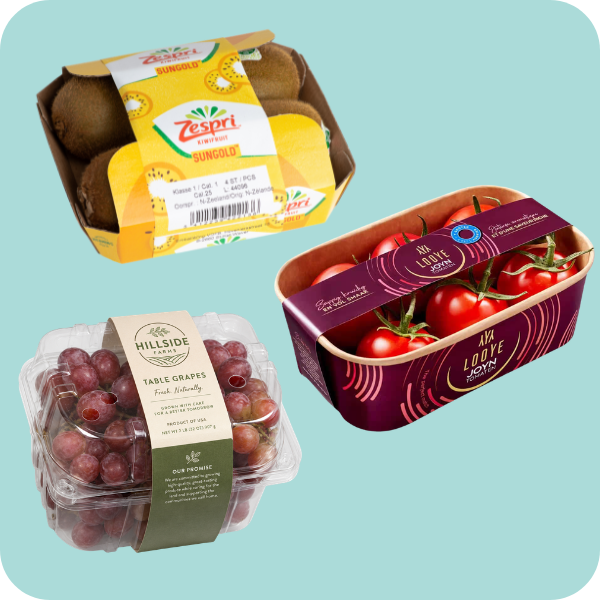
Banding cardboard punnets
Cardboard punnets are widely used for fruit because they offer a natural look and a practical way to present fresh produce. When combined with printed banding material, they can become even more effective from both a branding and functionality perspective.
A printed band adds a clear space for labeling and branding without covering the fruit. When the punnet and band are designed with matching colours, typography, or visual elements, the result is a cohesive packaging design that feels intentional and professional.
The band can also help keep the punnet closed during transport, handling, and retail display. This adds stability without the need for extra packaging components.
When both the punnet and band are paper-based, the combination can support a more easily separable packaging solution. Because the band is applied using heat rather than adhesives, it can be removed without leaving glue residue behind. This can make it easier to separate materials during the recycling process.
For cardboard punnets, banding is especially useful when producers want to combine a natural appearance, strong branding, practical closure, and clear product visibility.
Banding fruit trays
Fruit trays often need to create strong shelf impact while keeping the product easy to see. Banding works well in this format because it allows the tray and band to function as one integrated packaging design.
A printed band can add branding, product information, and visual structure to the tray without covering too much of the fruit. When the band and tray are designed together, the packaging can achieve a cleaner and more premium appearance than a tray with separate labels.
This approach can also help reduce the use of plastic components, depending on the tray material and packaging setup. A good example is Looye Joyn Tomatoes, where a printed paper band is combined with a printed cardboard tray to create a distinctive packaging design while reducing plastic usage.
For fruit trays, the main strength of banding lies in the combination of shelf appeal, brand recognition, and efficient material use. It helps producers create packaging that looks complete while still allowing the product itself to remain the focus.
Plastic clamshell packaging
Plastic clamshells are commonly used for delicate fruit because they protect the product while keeping it visible. However, they also need clear branding and reliable closure.
A printed band around a clamshell can provide both. Visually, it adds a clean communication surface for branding, product details, barcodes, and certifications without blocking the fruit inside. Functionally, it helps keep the clamshell securely closed throughout transport, handling, and retail display.
The band can also act as a tamper-evident seal. This gives retailers and consumers extra reassurance that the packaging has not been opened before purchase.
For clamshell packaging, banding is especially valuable when visibility, product protection, closure, and tamper evidence all need to work together in one packaging solution.
Plastic containers and tubs
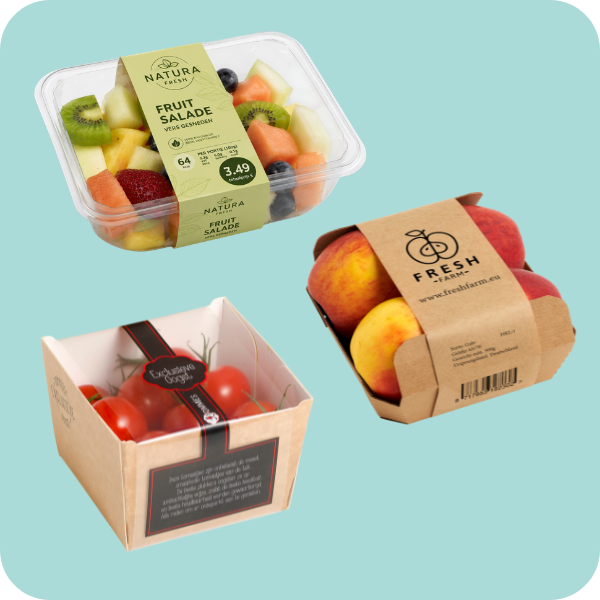
Plastic containers and tubs are often used for fruit portions, mixed fruit, berries, or products that need a secure lid. In these formats, banding can help connect the lid and container into one clear packaging unit.
The band wraps around the container and lid, helping to keep the packaging closed while also creating a tamper-evident seal. This is particularly useful for products that are handled frequently during logistics and retail display.
From a branding perspective, the band can replace or reduce the need for separate lid and side labels. This creates a cleaner and more integrated packaging appearance, with one printed component carrying the most important communication.
Because banding material is applied without adhesives, it can be removed more easily after use without leaving residue behind. This can make it easier to separate packaging components during recycling.
For plastic containers and tubs, banding is mainly useful for lid security, tamper evidence, cleaner design, and easier separation of materials.
Finding the right application for your fruit packaging
Fruit packaging needs to balance visibility, branding, protection, and practical functionality. Banding helps bring these requirements together in one flexible packaging solution.
Whether used on cardboard punnets, fruit trays, plastic clamshells, or plastic tubs, printed banding material can create more space for communication while keeping the fruit visible. It can also support closure, tamper evidence, material separation, and a more professional shelf presentation.
For fruit producers looking to improve visibility, strengthen brand recognition, and make packaging more functional, banding offers a versatile solution that can be adapted to many existing fruit packaging formats.

Applications of banding

Benefits of banding

Banding vs. other solutions

10 Reasons to switch to banding

Zwartz - From shrink wrap to paper bands

Novatrade - Improved quality and efficiency

Packaging food products
