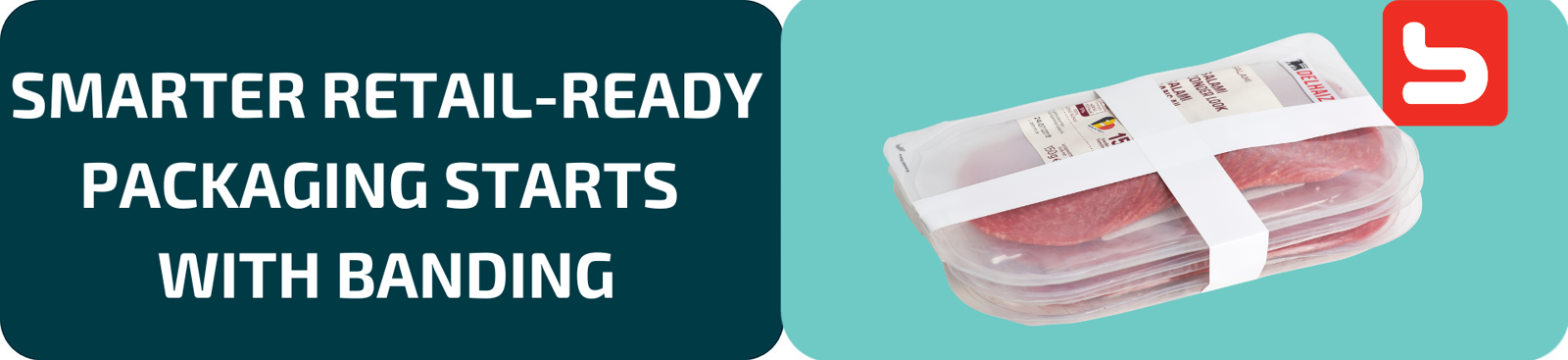
How banding supports retail-ready packaging
Retail-ready packaging (RRP) has become an essential part of modern retail operations. Designed to move products quickly and efficiently from warehouse to shelf, retail-ready packaging helps retailers improve replenishment speed, reduce handling time, and simplify in-store operations.
As retailers continue focusing on sustainability and operational efficiency, packaging solutions are also under increasing pressure to reduce waste, minimize material usage, and improve recyclability.
This is where banding can play an important role.
By replacing or reducing traditional packaging materials, such as shrink wrap, overwrap, trays, and outer cartons, banding helps create retail-ready packaging solutions that are simpler, cleaner, and more efficient across the supply chain.
What is retail-ready packaging?
Retail-ready packaging refers to packaging that arrives at the store ready for immediate shelf display. Instead of unpacking individual products one by one, store employees can place grouped products directly onto shelves or displays with minimal preparation.
Retail-ready packaging is designed to improve:
- Shelf replenishment speed
- Product handling efficiency
- Transport stability
- In-store presentation
The goal is to reduce the time, labor, and packaging complexity involved in moving products from delivery to shelf.
The challenges with traditional retail-ready packaging
Many retail-ready packaging formats still rely heavily on materials, such as shrink wrap, display cartons, corrugated trays, sleeves, and plastic overwrap to secure products during transport and distribution.
While these methods can improve product stability, they also increase packaging waste and material usage throughout the supply chain.
Traditional retail packaging often adds unnecessary bulk, reduces product visibility, increases transport weight, and slows down replenishment processes in-store. Much of this packaging is removed and discarded almost immediately after products arrive at the retail environment.
As sustainability targets continue becoming more important for retailers and manufacturers, reducing excess packaging material has become a growing priority.
How banding improves retail-ready packaging
Banding offers a more streamlined approach to retail-ready packaging by securing products together using a narrow paper or film band instead of fully enclosing them in additional packaging materials.
This minimal packaging approach helps businesses reduce material usage while still maintaining product stability, handling efficiency, and shelf readiness throughout the supply chain.
Banding supports retail-ready packaging by helping products remain easy to transport, identify, replenish, display, and recycle — all while reducing unnecessary packaging waste.
The result is a cleaner and more efficient packaging process with less material entering the retail environment.
Easy to replenish
Retail-ready packaging is designed to improve shelf replenishment speed, and banding helps simplify this process even further.
Because products remain securely grouped, employees can transfer multiple items to shelves at once instead of stocking products individually. This reduces handling time, improves replenishment efficiency, and helps keep shelves stocked with minimal disruption.
Simplifying replenishment processes can also help retailers reduce labor demands and improve shelf availability during busy retail periods.
Easy to transport
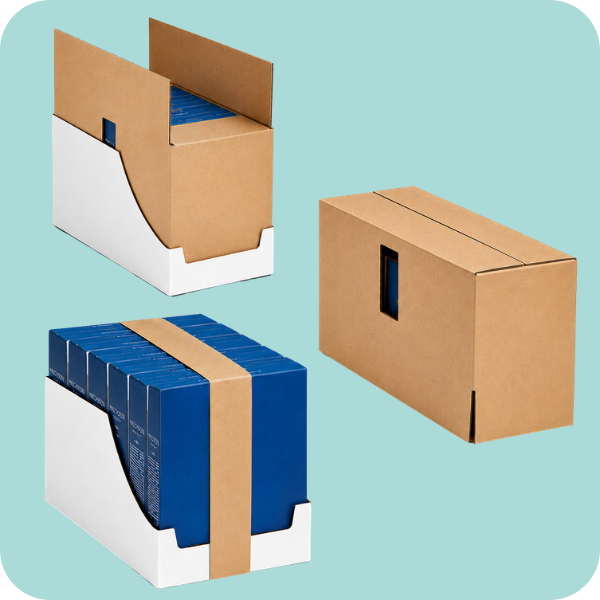
Banding helps keep products securely grouped throughout transport and distribution without relying on excessive packaging materials. By bundling products with a narrow paper or film band, businesses can reduce the need for bulky outer cartons, shrink wrap, or additional protective packaging.
This creates lighter and more streamlined retail-ready packaging that is easier to move through the supply chain while still maintaining product stability during shipping and handling.
Reducing packaging weight and volume can also help improve logistics efficiency and lower overall material consumption.
Easy to identify
Clear product identification is essential in fast-moving retail and distribution environments, where speed and accuracy directly impact operational efficiency.
Banding supports this by allowing variable data, such as QR codes, barcodes, batch numbers, product information, or tracking data, to be printed directly onto the banding material itself. This gives distributors, warehouse staff, and retailers immediate access to important product information without needing additional labels or outer packaging.
Because the band is positioned visibly around the product bundle, products can be quickly scanned, identified, sorted, and replenished throughout the supply chain. This helps improve inventory handling, simplifies stock management, and reduces the time spent locating products in warehouses, distribution centers, and back-of-store retail operations.
Easier to recycle
Reducing packaging complexity also makes recycling and disposal easier for retailers.
Banding minimizes the number of packaging components entering the store, helping reduce loose waste materials and simplifying waste separation. Paper banding solutions can further support recycling initiatives and plastic reduction goals by replacing larger packaging formats with minimal recyclable material.
With less packaging to remove and process, retail operations become cleaner, simpler, and more efficient while reducing overall waste volumes.
Reducing packaging waste in retail
Retail stores already manage significant amounts of packaging waste every day, especially from secondary and tertiary packaging materials removed during replenishment.
Banding helps reduce this waste by minimizing the amount of packaging required to group and stabilize products.
Compared to traditional retail-ready packaging methods, banding can help:
- Reduce plastic consumption
- Eliminate unnecessary outer packaging
- Reduce loose packaging waste
- Simplify recycling processes
- Minimize waste volume in stores
Less packaging entering the retail environment means less packaging to manage, separate, and dispose of later.
Conclusion
Retail-ready packaging continues to play a major role in improving retail efficiency, shelf replenishment, and product presentation. However, traditional packaging methods often rely on excess material that increases waste, costs, and operational complexity throughout the supply chain.
Banding helps solve this challenge by creating retail-ready packaging solutions that use less material while maintaining stability, visibility, and efficiency from transport to shelf.
As retailers continue prioritizing sustainability and operational performance, banding offers a smarter, cleaner, and more efficient approach to modern retail-ready packaging.
Curious to learn more about banding?

Applications of banding

Benefits of banding

Banding vs. other solutions

10 Reasons to switch to banding

Zwartz - From shrink wrap to paper bands

Novatrade - Improved quality and efficiency

Packaging food products
