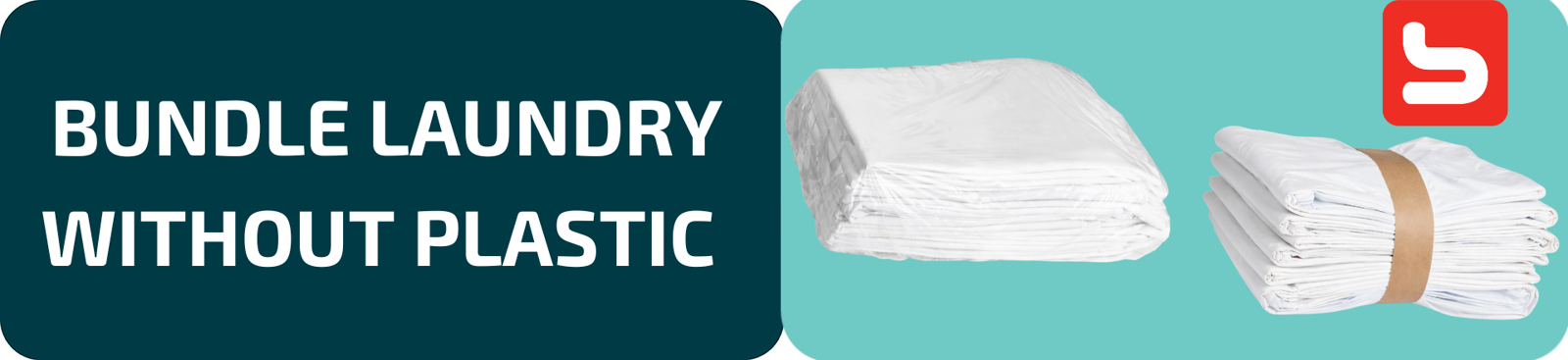
How to bundle laundry without plastic packaging
Sustainability is no longer optional in the laundry industry. It’s expected. From hospitality groups to healthcare providers, customers are increasingly demanding environmentally responsible practices across the entire supply chain. Yet despite this shift, many commercial laundries still rely heavily on single-use plastic packaging to bundle and protect textiles.
The problem with plastic packaging in laundry operations
Plastic bags and shrinkwrap have long been the standard for bundling clean laundry. They’re familiar, easy to use, and widely available. But their drawbacks are becoming harder to ignore.
One reason is that plastic packaging generates significant waste. In high-volume laundry operations, the sheer number of plastic bags used daily quickly adds up, contributing to environmental pollution and landfill overflow.
Another reason is that plastic packaging goes against modern sustainability goals. Businesses aiming to reduce their environmental footprint, or comply with tightening regulations, are finding plastic increasingly incompatible with their long-term strategy.
A better alternative: Paper banding
Paper banding is emerging as a simple yet highly effective alternative to plastic packaging in commercial laundry.
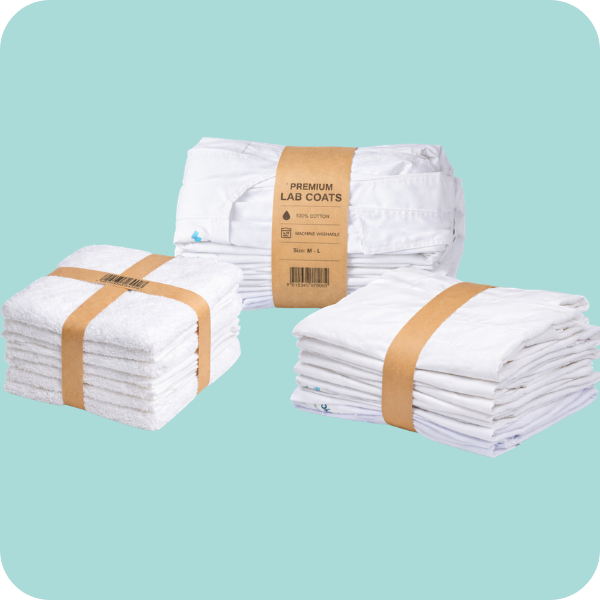
Instead of enclosing textiles in a plastic bag, a durable paper band is applied around folded laundry items. This keeps bundles secure while eliminating the need for excess material.
Unlike plastic bags, paper bands aim to reduce material usage, making them an environmentally responsible choice without compromising functionality.
How plastic-free laundry bundling works
The process is straightforward and efficient.
After laundry is cleaned and folded, items are stacked into neat bundles. A banding machine then applies paper banding material around the bundle, sealing it at an optimal tension, ensuring the stack holds everything firmly in place.
One of the biggest advantages of this method is material reduction. Compared to traditional plastic packaging, banding can reduce material use by up to 80%, while still keeping textiles tightly packed and ready for transport.
Another benefit is flexibility. Paper bands can be printed or combined with labels, making it easy to add branding, product information, or barcodes for tracking.
By understanding these differences, laundry businesses can create smarter packaging systems that improve both logistics and inventory management.
Key benefits of plastic-free bundling
Switching to paper banding delivers both environmental and operational advantages.
Significant Reduction in Plastic Waste
By eliminating single-use plastic bags, laundries can dramatically reduce their environmental impact. This supports sustainability targets and helps meet growing customer expectations.
Lower Material Costs Over Time
Paper banding uses less material overall. With fewer resources required per bundle, businesses can reduce ongoing packaging expenses.
Improved Brand Image
Sustainability is a strong differentiator. Adopting eco-friendly bundling demonstrates responsibility and innovation, qualities increasingly valued by clients and partners.
Easier Recycling for End Users
Plastic bags use a lot of material, creating unnecessary waste. Paper bands use only a thin strip, making them easy to remove, collect, and throw away.
Operational advantages of banding over plastic
Beyond sustainability, banding improves efficiency across laundry operations.
Faster Packing Processes
Banding systems, especially automated ones, streamline the bundling process. This reduces manual handling and increases throughput.
Seamless Integration with Automation
Modern banding solutions integrate easily into automated laundry lines, supporting high-volume operations without slowing them down.
A smarter way forward for laundry businesses
Moving away from plastic packaging is essential for more sustainable operations. Paper banding helps reduce waste, improve efficiency, and lower your carbon footprint, without adding complexity.
It’s a practical, scalable solution that delivers:
- Less waste
- Lower costs
- Greater efficiency
- Stronger sustainability credentials
Switching to banding is a strategic upgrade
By replacing plastic packaging with paper banding, commercial laundries can streamline operations, reduce costs, and meet the growing demand for sustainable practices, all without compromising quality or performance.
In a rapidly evolving industry, plastic-free bundling isn’t just better for the planet; it’s better for business.

Applications of banding

Benefits of banding

Banding vs. other solutions

10 Reasons to switch to banding

Zwartz - From shrink wrap to paper bands

Novatrade - Improved quality and efficiency

Packaging food products
