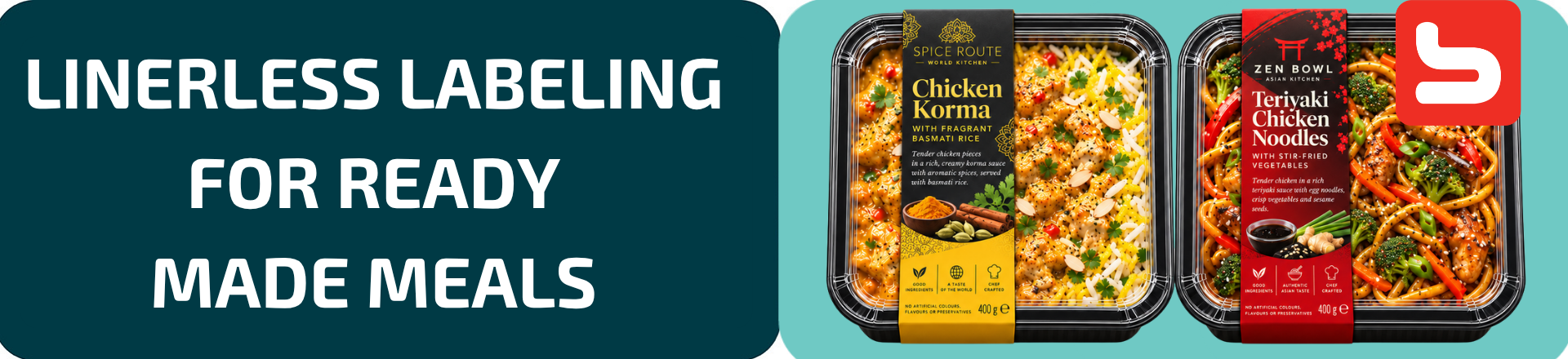
A different approach to ready-meal labeling
Labeling is an essential part of ready-meal packaging. It tells consumers what the product is, what is inside it, how it should be prepared, and much more.
Often, this information is added using an adhesive label applied directly to the tray, lid, or film.
It is a familiar solution in the ready-meal industry, but it also comes with limitations. Space for branding and product information is restricted, labels rely on adhesive, and traditional pressure-sensitive labels generate backing liner waste during application.
Banding offers a different approach.
By wrapping printed banding material around the product, manufacturers can create a linerless labeling solution that brings branding, product information, and variable data together without sticking a label onto the primary packaging.
Banding as a linerless labeling solution
A typical pressure-sensitive label consists of three elements:
Label + adhesive + release liner
Linerless labels remove the release liner, but many still depend on adhesive to stay attached to the packaging.
Banding works differently.
During the banding process, the material is wrapped around the product, brought to the required tension, and sealed to itself to form a secure band around the packaging. There is no backing liner left behind during application, and the band does not need adhesive to stay in position on the packaging.
This means the band can take over the role normally performed by an adhesive label, while offering more possibilities for how information and branding are presented.
More space with 360-degree branding and labeling
One of the biggest limitations of a typical adhesive label is simply the amount of space available.
A square or rectangular label needs to stick to a defined area of the packaging, usually on the lid. Making that label larger creates more room for information, but it also covers more of the packaging and the meal itself.
That is why labels are often kept relatively small.
The downside is that branding, ingredients, nutritional information, preparation instructions, and other details can quickly start competing for the same limited space.
Banding approaches this differently.
Instead of using just one surface, the band runs around the packaging. This creates additional space for branding and labeling without having to cover a larger part of the top of the packaging.
What banding essentially offers is a way to spread more information around the packaging instead of squeezing into one small area. This offers brands more freedom to create a clear and attractive presentation.
From a stuck-on label to information printed on the band
The difference is also easy to see on the production floor.
With traditional adhesive labeling, information is printed or pre-printed onto a label. The label is separated from its backing liner and then stuck onto the packaging.
With banding, the material itself becomes the labeling surface.
Branding and fixed information can already be printed on the banding material, while additional information can be printed onto designated areas during production.
The finished band is then applied around the packaging. This means manufacturers can brand and label their ready to go meals while removing backing liner waste from their operations.
Print fixed and variable data where you need it
Not everything on a ready-meal packaging needs to be printed in advance.
In fact, pre-printing all product information can create unnecessary risk.
A recipe might change. An ingredient or allergen declaration may need updating. Product information could contain an error. And when that happens, pre-printed stock with outdated information may no longer be usable.
The challenge becomes even greater when managing multiple SKUs, seasonal products, or products that change frequently.
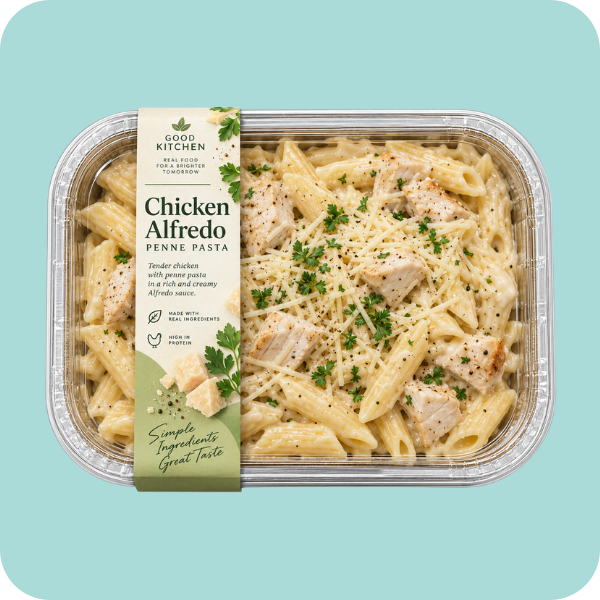
Integrated printing makes it possible to leave designated areas of the band available for information that is added during production.
Depending on the application, this could include:
- Ingredients and allergen information
- Use-by or best-before dates
- Barcodes and QR codes
- Batch or product information
- Other product-specific data
This allows manufacturers to combine a pre-printed branded design with information that is only added when the product is actually being packaged.
The result is greater flexibility and less dependence on having every possible product variation pre-printed and in stock.
What about variable-weight ready meals?
For ready meals sold by weight, the information becomes even more dynamic.
The exact weight and price may only be known once the product reaches the final stages of production.
With an integrated weigh-print-band process, the meal can be weighed, the relevant information generated, printed directly onto the banding material, and then applied around the pack.
For example:
Front of the band
Product name, weight, and price.
Back of the band
Barcode and additional variable information.
The process becomes:
Weigh → generate data → print → band
This removes the need to print and apply a separate weigh-price label. Instead, the variable information becomes part of the same band that is already carrying the product branding and other information.
No adhesive on the packaging
Removing the liner is one benefit. Removing the need for adhesive is another.
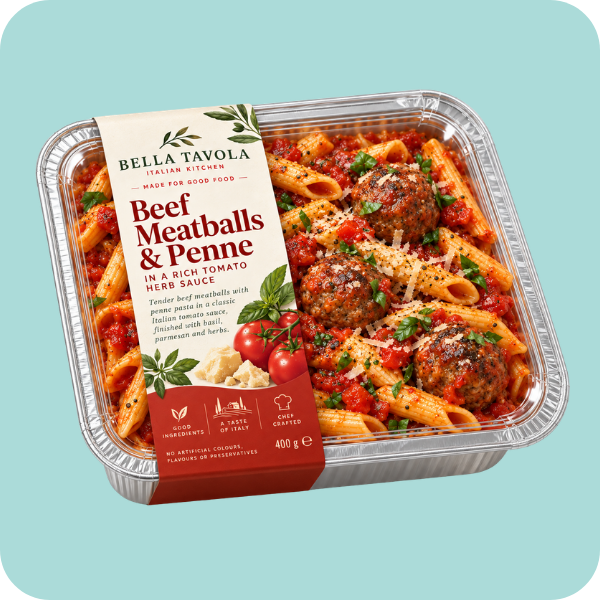
Because the banding material is tensioned around the product rather than stuck onto it, no adhesive is required between the band and the primary packaging.
This means there is no adhesive residue left on the tray, lid, or film when the band is removed.
It also makes banding less dependent on finding a suitable surface for a label to stick to.
For manufacturers exploring linerless labeling, this is an important distinction: banding does not simply remove the liner from the labeling process. It removes the need to stick the labeling material to the packaging in the first place.
A clearer approach to tamper evidence
For many ready meals, it is also important that consumers can see whether a product may have been opened.
A small adhesive label on top of a lid does not necessarily prevent the packaging from being opened. Even when a label is positioned across one opening point, another side of the product may remain accessible.
Banding creates a more complete and visible barrier.
When it runs around the packaging and across the opening points, the tensioned band needs to be broken or removed before the lid can be opened.
If the band has been broken, damaged, or removed, it provides a clear visual indication that the packaging may have been opened.
For trays, bowls, and clamshell-style packaging, tamper evidence can therefore become another function of the same band already being used for branding and labeling.
Rethinking the ready-meal label
Linerless labeling does not have to mean simply removing the backing liner from a conventional label.
For ready meals, banding offers an opportunity to rethink the labeling process altogether.
One band can provide space for branding and product information, carry fixed and variable data, incorporate weight and price information, eliminate release liner waste, avoid adhesive on the primary packaging, and support visible tamper evidence.
Instead of adding another label to the pack, the packaging itself can work harder.
So perhaps the more interesting question is not how to make an adhesive label linerless.
Could the band become the label instead?
Want to read more about banding ready-made meal packaging?

Applications of banding

Benefits of banding

Banding vs. other solutions

10 Reasons to switch to banding

Zwartz - From shrink wrap to paper bands

Novatrade - Improved quality and efficiency

Packaging food products
