CleanLease replaces plastic bags with paper banding
CleanLease supplies professionally cleaned towels, linen and other textiles to hospitals, care facilities and holiday parks across the Netherlands and Belgium.
For years, plastic bags were used to keep clean textile bundles together during handling and delivery. But growing packaging waste, changing European requirements and CleanLease’s own sustainability ambitions created a clear reason to reconsider that process.
The company needed a lower-plastic laundry packaging solution that could secure textile bundles efficiently without disrupting its automated operation.
The answer was paper banding.
Rethinking plastic packaging for clean laundry
CleanLease processes large volumes of towels, linen, and other textiles every day.
Plastic bags provided a familiar way to keep those products grouped. However, each bundle required approximately 20 to 30 grams of plastic packaging. Across a large-scale laundry operation, this created a substantial and recurring waste stream.
At the same time, the introduction of new European packaging rules prompted CleanLease to look critically at its use of packaging material.
“We received the question: how are you going to adjust to the new packaging regulations? We then started looking critically at our own processes.”
CleanLease wanted to reduce plastic use and prepare its packaging operation for the future without compromising bundle stability, hygiene or production efficiency.
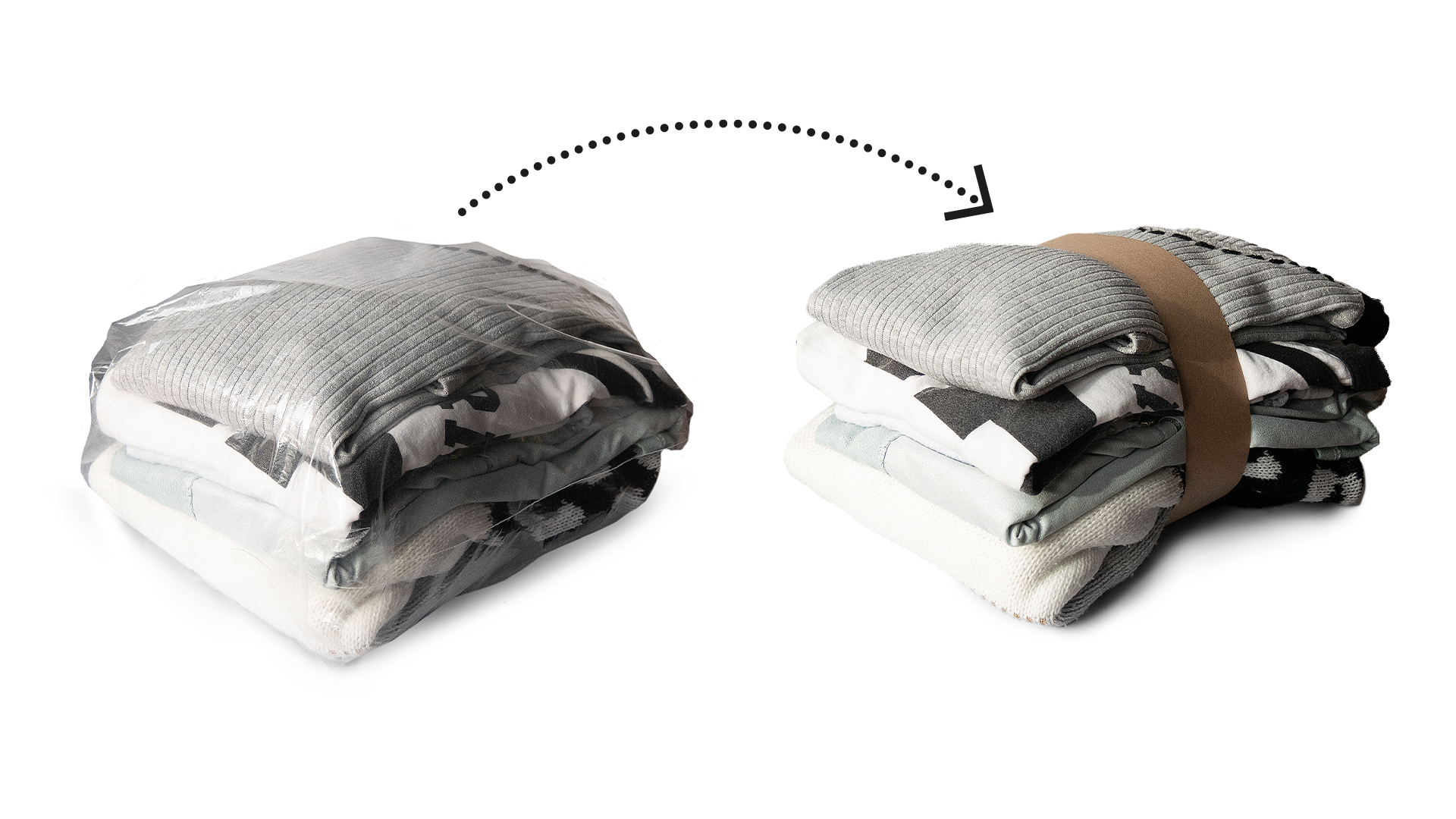
From plastic bags to paper bands
Instead of fully enclosing each textile bundle in a plastic bag, CleanLease now secures it with a narrow paper band.
The band keeps towels, linen and other laundry items grouped using only a few grams of material. This allows CleanLease to substantially reduce the packaging required for every bundle.
“We chose banding because it helps us reduce waste and use less material.”
The paper band is easy to remove after delivery, making it simple for customers to separate the packaging from the textiles.
Adapting banding to different textile bundles
Laundry bundles are not always uniform. Their height and dimensions can vary depending on the textile type, fold, and number of items.
CleanLease and Bandall therefore worked closely together to adapt the bundling process to these variations. The system was configured to handle different bundle formats while applying each band securely and consistently.
Bandall’s service team supported the implementation and integration into CleanLease’s existing production environment.
The result is an automated textile bundling solution that fits into the daily laundry process without requiring employees to package each bundle manually.
Thousands of kilograms less plastic
Replacing plastic bags with paper bands has significantly reduced the amount of packaging used by CleanLease.
Where a plastic bag previously required around 20 to 30 grams of material, a paper band achieves the required bundling function with only a few grams.
Across CleanLease’s production volumes, this results in thousands of kilograms of plastic packaging avoided each year.
The switch has helped CleanLease:
- Reduce single-use plastic packaging
- Use less material for each textile bundle
- Prepare for evolving packaging requirements
- Automate the bundling of towels and linen
- Maintain consistent and secure bundles
- Simplify packaging separation after delivery
- Reduce its overall packaging footprint
Built into the laundry process
The banding system is integrated into CleanLease’s automated production line.
Once the textiles have been cleaned, folded and stacked, the bundles move into the banding process. The paper band is applied automatically, creating a secure bundle that can continue to handling and distribution.
This enables CleanLease to reduce packaging material without introducing a slow or labour-intensive manual step.
Banding therefore supports both the company’s environmental goals and the operational efficiency required in a large industrial laundry.
Preparing laundry packaging for the future
For CleanLease, changing the packaging method was not only about replacing one material with another.
It was an opportunity to reconsider how much packaging was actually needed to keep clean laundry bundled.
“The switch to banding helps us stay ahead of regulations while staying true to our sustainability values. It’s not just about compliance, it’s about leading responsibly.”
By securing textile bundles with a narrow paper band instead of fully enclosing them in plastic, CleanLease has created a leaner and more future-ready laundry packaging process.
The result shows that industrial laundries can reduce packaging waste while maintaining the consistency and efficiency required for large-scale operations.
Ready to reduce plastic in your laundry packaging?
Bundle towels, linen and other textiles using only the material required to keep them together.
Let’s explore how paper banding could fit your laundry process.

Banding Commercial Laundry

Banding vs. Shrink Wrap

10 Reasons to Switch to Banding
